Monday, August 8, 2011

Engineered To Crash...............

Can it be that the Market's are rigged?


It was suggested 1.5 years ago that the next stock market crash might be one orchestrated by the Fed to  create interest from historic buyers of US debt. The scenario went like this: you let the stock market collapse (i.e. no interference by the infamous “Plunge Protection Team”) to generate a “flight to safety” environment which would push billions, if not hundreds of billions, of dollars into U.S. Treasuries, soaking up its increasing debt issuance and roll-over with little difficulty thereby flooding the bond market with much needed demand. Were the recent dramatic declines in the U.S. stock markets so engineered by the Fed? Words: 852
Graham Summers was the individual who suggested the above back in January 2010 an article* aptly entitled Will the Fed Engineer a Stock Market Crash to Flood the Bond Market With Much Needed Demand? In light of the events of this week Lorimer Wilson, editor of www.munKNEE.com (It’s all about Money!), has revisited that insightful article and presents it below in an edited ([  ]), abridged (…), updated and reformatted fashion for the sake of timeliness, clarity and brevity to ensure a fast and easy read. Please note that this paragraph must be included in any article re-posting to avoid copyright infringement. The gist of Summers’ comments was along these lines:
The U.S. Treasury is facing a debt spiral; a situation where it needs to issue [large quantities] of new debt every month while rolling over trillions in existing debt at a time when investors are willing to lend to it for shorter and shorter periods of time. The big question has always been: who’s going to be buying this stuff ? 
[The events of the past 2 months in Washington, where the underlying dire financial insolvency of the nation was blatantly ignored in favor of expedient short-term political posturing, has clearly demonstrated to the entire world the inability of the U.S. government to resolve the problem let alone even deal with it in a serious non-partisan way. It became very clear that holding the debt of a bankrupt country such as the U.S. was hardly a safe haven for assets.]
Historically, foreign investors and foreign governments were the biggest buyers of US debt… [but,] suffice it to say,] given the juvenile display of total irresponsibility during the debt ceiling debate] foreign governments [were hardly inclined to] step in to pick up the slack in the Treasury market.
The next biggest purchaser of U.S. debt behind foreign governments… is the Federal Reserve itself via its quantitative easing programs. Given that unpopularity [and apparent ineffectiveness] of this approach it is unlikely to be repeated (at least not in a form large enough to pick up any slack in the Treasury markets).
So what about state or local governments, pension funds, or insurance companies (historically decent sized buyers of U.S. debt)?…These groups have been either net sellers or small buyers of Treasury debt of late so the likelihood that these groups suddenly buy hundreds of billions of dollars of Treasuries is minimal…
The same goes for “other investors” …(comprised of “Individuals, Government-Sponsored Enterprises (GSE), Brokers and Dealers, Bank Personal Trusts and Estates, Corporate and Non-Corporate Businesses, Individuals and Other Investors)… unless, of course, we have another crash in the stock market.
Think about it. The U.S., if it were treated like a corporation, is effectively bankrupt. It has to issue a massive amount of new debt while rolling over trillion in old debt at the very time that most historic buyers of U.S. debt are losing interest in lending to the US for any period longer than a few years.
Who in the world is currently reading this article along with you? Click here to find out.
So how do you create interest from historic buyers of U.S. debt? Simple, you let the stock market collapse. The “flight to safety” that would follow would push billions if not hundreds of billions of dollars into Treasuries, soaking up the debt issuance and roll-over with little difficulty…
I am not saying the Fed and friends will do this but, given that the Fed is coming under increased scrutiny as public outrage rises, letting stocks come unhinged it perhaps the least politically controversial move the Fed could make as opposed to more quantitative easing which would really get the public upset. [Letting the stock market crash] would do the following:
1) Bring stocks closer to reality…
2) Create great demand for Treasuries (something the US desperately).
3) Have relatively minor political ramifications compared to another quantitative easing program or more bailouts…
Conclusion
Could the Fed be preparing another [indeed, has the Fed engineered the recent] stock crash to flood the bond market with demand? Who knows but it would make plenty of sense to me.
*http://www.marketoracle.co.uk/Article16321.html  ( Summers’ www.GainsPainsCapital.com provides a free daily newsletter dedicated to providing daily insights to the stock, commodity, currency, and bond markets and telling investors the REAL story behind the moves in the financial markets.)

Wednesday, August 3, 2011

Why is Obama failing?

 I don't want to criticize our President , after all when he was running for the office he wanted to "change" how government worked .In the end he may have failed like Arnold Schwarzenegger did as California Governor.

The President has a vary unworkable situation from the start . He walks in with trillions  of debt by the last administration  . In stead of curbing spending the first year of his term , he spends and spends . Hoping for "growth" in the infrastructure .Put another way, an unprecedented degree of federal government spending and intervention vis-à-vis the $787 billion dollar economic stimulus package, the $81 billion dollar bailouts of GM and Chrysler, and the enactment of health care and financial regulatory and reform bills have done nothing to stimulate our anemic recovery and have fundamentally failed at creating private sector jobs, or generating economic growth necessary for a sustainable, healthy recovery 

The stimulus that was spent was in fact "Capitalist Experiment" to say the least .
While he's been failing every which way in the debt ceiling debacle, President Obama's other failures continue to pile up. The latest via Reuters:
The U.S. economy came perilously close to flat-lining in the first quarter and grew at a meager 1.3 percent annual rate in the April-June period as consumer spending barely rose.

The Commerce Department data on Friday also showed the current lull in the economy began earlier than had been thought, with the growth losing steam late last year.
Note: Sounds like the slowdown started right around the time ObamaCare was passed. Coincidence?

And it gets worse.... Remember how bad the economy has been in the past year? Well, it's even worse than anyone thought:
Growth in gross domestic product -- a measure of all goods and services produced within U.S. borders - rose at a 1.3 percent annual rate. First-quarter output was sharply revised down to a 0.4 percent pace from a 1.9 percent increase.

Economists had expected the economy to expand at a 1.8 percent rate in the second quarter. Fourth-quarter growth was revised to a 2.3 percent rate from 3.1 percent.

"The second quarter disappointed, but the first-quarter downward revision is more disturbing. It advances the pangs of concern. The debt ceiling nonsense is not going to help us. We're already in an economy that is subpar," said Scott Brown, chief economist at Raymond James in St. Petersburg, Florida.

"Gasoline price increasing from $3 to $4, that really slapped the consumer back considerably."
Of course, none of this is Obama's fault. He's just the President!.
 
As the deadline drew closer, the two sides abandoned a series of efforts to reach agreement, searching for the right combination of policies and personalities to get a deal done. In the end, it fell to two consummate Washington insiders to prevent the talks from collapsing.
A Reuters examination of the months-long showdown over the debt ceiling found that:
* Vice President Joe Biden and Senate Republican Leader Mitch McConnell emerged as critical players in the final stretch of the talks, as theirs was the only cross-party relationship built on decades of trust.
* Despite a belief among many rank-and-file Republicans that the government could muddle through a default, party leaders never doubted the Treasury Department's warnings that economic catastrophe was a real possibility if they didn't reach a deal by August 2.
* Although House of Representatives Speaker John Boehner, the top U.S. Republican, was eager to strike a bold deal with Obama, it was ultimately necessary for Boehner to distance himself from the White House to convince his House Republicans to back the final deal.
* The business community played an important behind-the-scenes role, with two White House foes -- Wall Street and the Chamber of Commerce -- rallying support for a compromise backed by Obama.
This account of America's journey to the brink of default is based on interviews conducted over the past six weeks with dozens of elected officials, business lobbyists and aides in the House, the Senate and the White House.


Wednesday, July 27, 2011

America is "bust".


Uncle Sam is Not to Proud of Congress, or the President .
"They have spent themselves in debt , and now every hard working American , young , and old will suffer." - Uncle Sam


The finances of the world’s biggest economy are showing increasing signs of distress. At the end of June, US borrowings stood at a record $14 trillion: more than the total for the eurozone as a whole. Is America bust?
Its debt burden is still a smaller proportion of its economy than many European countries (just under two thirds of GDP, as opposed to 115 per cent of GDP in crisis-stricken Greece, and over 70 per cent in Germany and France). But the US deficit is nowhere near its peak: the IMF estimates that, on present policies, debt will reach 95 per cent of GDP by 2020 and, as its ageing population needs more spending on health and social security, it could hit 135 per cent by 2030 and continue to rise thereafter.
President Obama is promised  to halve the budget deficit by 2013 and stabilize it at just over 70 per cent of GDP by 2015. But the first date is just three years away and no one knows quite how that will be achieved. While countries across Europe are announcing austerity packages—Spain is cutting €15bn, Germany €80bn—the US administration’s instinct is to spend its way out of recession. Obama failed to persuade the rest of the G20 about the benefits of increasing spending in the face of the global crisis, yet he is also having little success in persuading people at home of the need for austerity. A key test will come at the end of the year when the tax cuts of the Bush era expire. Obama wants to keep them for all but the rich; the doves think they should be continued for everyone and the hawks say they should not only be abandoned but accompanied by swingeing tax rises.
For the moment, a bit of profligacy is no bad thing. As one of the few western countries that still has the wherewithal to keep spending, the US has been a big component of the global recovery. The IMF pays tribute to the “strong and effective macroeconomic response” of the US authorities, which means “the recovery has proved stronger than we had expected.”
Its assessment may have been premature. Recent data from the US has been relentlessly disappointing: in July, American businesses cut their employees by 131,000, the second monthly fall in a row. And the US Federal Reserve spooked the markets with its warning that the pace of recovery had slowed and was likely to remain modest, and pledging to maintain its $2 trillion support package.
That may make investors start to question their sanguine attitude to the ballooning deficit. While government bonds in countries like Greece and Spain have plunged in value, sending yields (investor-speak for the interest rate divided by the price at which the bonds trade) soaring to more than 12 per cent in Greece, the US is still seen as a safe haven: its treasury bonds have actually risen in value, pushing yields down to around 1 per cent, despite the ballooning deficit.
Can it continue? Ken Rogoff, the Harvard professor whose book This Time it is Different is the definitive analysis of the history of financial crises, accuses the US of storing up trouble for itself by using a trick called “playing the yield curve”: taking advantage of the fact that the rates for short-term borrowing are lower than for longer-term debt. About half of US debt matures in the next three years, a far higher proportion of short-term debt than it has had at any time in the past, and a far shorter maturity profile than other economies: the average for Britain, for example, is 14 years. And it’s worth remembering that the Greek crisis was triggered by the need to refinance short-term borrowings, forcing the country into its crisis €110bn bailout and €35bn cuts package.
No one expects the US to need such a bailout, but the huge amount of debt which will need to be refinanced in the next three years means it is vulnerable to a “buyers strike” should investors decide there are better opportunities elsewhere, or to demand higher yields for the increased risks of the rising deficit. Much depends on the attitude of the Chinese, who currently hold around half of all US debt. So far, they have shown no inclination to stop buying it, but the risks that the appetite could wane are already evident. China is moving gradually to a free float of its currency, ending the dollar peg, which could eventually cut the supply of dollars to its export earners.
It also means the US is missing the opportunity to lock into long-term rates which, while higher than short-term ones, are still very low by historical standards. As this stand, a small rise in interest rates could have a big impact. Jim Leaviss, heads of retail fixed interest at fund managers M&G points out that a 2 per cent rise in interest rates across all maturity levels could push the US interest bill from the current, “troubling” 17 per cent of revenues to around 33 per cent. That, says Leaviss “could put economic recovery at risk.”
Such a hike in rates looks unlikely in the near future. Even the most hawkish of economists think that interest rates will stay low for at least another year to keep the recovery going. That recovery, and the tax revenues it will generate, is vital to keep the faith that the US will be able to deal with its deficit. But Rogoff points out that, judging by historical standards, the higher the budget deficit, the lower economic growth tends to be: his rule of thumb is that, at a deficit of 30 per cent of GDP, growth will average 3.7 per cent; at more than 90 per cent—which the US will reach this year—it falls to 1.7 per cent.
With Europe still in turmoil and doubts about the sustainability of the recovery in Asia, America’s status as a safe haven may not change any time soon. Analysts at Barclays Capital argue that the dollar’s status as a reserve currency means it can run far bigger deficits than other countries. Without that status, the US’s credit rating would already been downgraded from AAA to AA, the same as Spain. But as long as its currency remains more than half the world’s reserves—currently it is 60 per cent —a downgrade looks unlikely.
Yet the more it increases spending and delays tax rises, the bigger the problems being stored up for the future. Sooner or later, financial markets will want to see some evidence that the US is not only aware of its deficit problem, but has the will and wherewithal to deal with it.

AD-NOTES to THIS CRISIS:
Is August 2nd really the debt limit deadline? Despite multiple statements from President Barack Obama and Treasury Secretary Tim Geithner that the government will not be able to meet all of its obligations after that date, a new UBS report sets the real deadline perhaps a week later.
"UBS analysis suggests (the U.S.) Treasury has the funds to make all payments until about August 8th - 10th," wrote Chris Ahrens, head of interest rate strategy for the firm in a note obtained by The Wall Street Journal.


Monday, July 25, 2011

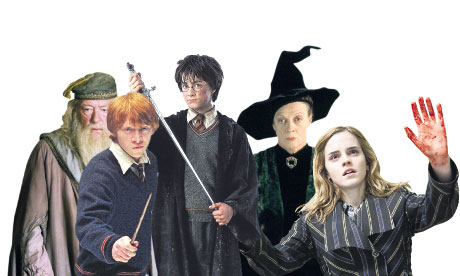
Glad the Potter Films are done?

I was certainly glad when the Harry Potter films ended .

I don't want to be mean . I am sure that saying something about the Potter Films , and Books might stir an ire .I did not care for the books . I bought over time Volumes 1 through 7 contributing every dollar and every pound , euro to the craze that Mrs.JK Rowling's created.

Sure the "books" did get Children to "read" . Finally , there was a book children were reading . Rowling's magic sure enough placated the educational world with new heights for children s books . However a cleave eye could see right through the looking glass. The Harry Potter Books were not intended for children , yet were marketed for children . It's Vary much like the 'Twilight" saga about werewolves and vampires appealing to young teen age girls. The Potter films were a over zealous marketing scam in some way . The Books and the films are vary different if you compare them . There are a number of bits along the seven books that Harry Potter was Lord Voldermort's son , though never indicated in the first book , that Harry's parents were killed by Lord Voldermort . Rowling borrowed from every occult symbol to wrap Harry in . Harry's scar on his forehead for instance was Voldermort's mark on Harry . Books 1 through 7 don't exactly say how old Harry was when he was left on the Door step of his adapted parents  as an Orphan , but each book seemed like a initiation . The First Volume introduced us to Hogwart's school , with a bunch of "mysteries" all about Harry that carried over into the 5 book .Personally, I’m not that much a fan of the books. I think Rowling has a fabulous imagination and created something fun and entertaining that will probably be with us for decades, but I fail to see what all the hype is about. The books are truly poorly-written, her phrasing is awkward, and the woman just has no sense of style.Another problem I have with the books is that while she spends gads of time developing all these wonderful side-characters that her titular protagonist goes unnoticed, and gradually more annoying with each book. The more time she spent painting her lush, magical world and it’s fun people (I loved Luna, and I loved Dumbledore, and Mad-eye, and Voldemort was such a fascinating antagonist) the more Harry, Hermione, and Ron looked like assholes!I hate whiny, negative people in the real-world. I’m not going to read about them for six-hundred plus pages.

Harry Potter created hysteria among religious fundamentalists  burning the books , or of  course it was part of the marketing of the books . Schools in America took the Potter stuff vary seriously as much as they did in United Kingdom . They started to incorporate the Harry books into their curriculum , teachers sat and read the books to students . There were Halloween parades in schools where Harry Potter themes ran . I don't think some of the children cared .Harry Potter films influenced children's  attire as well , most moms seemed to done Harry Potter hair cuts to their boys . Particularly eye glasses sold with a Potterish flare.
For the Movie industry  , and Mrs. Rowling's it translated into huge Millions . All the actor's grew up rather fast between each film  , two of them have already acted in plays and movies that show nudity.

Here's a few bits on Harry's Family tree. Lord Voldermort is related to Harry Potter in case any one has really read the books.


Note: The names 'Thomas' and 'Mary' Riddle are taken from the films and the Potter Family is not shown.


Salazar Slytherin
 
The Peverell Family


Thomas Riddle
 
Mary Riddle
 
Marvolo Gaunt


Tom Riddle Sr.
 
Merope Gaunt
 
Morfin Gaunt


Tom Marvolo Riddle


Harry Potter


Any way . I hoping that there are no More Harry Potter films . On the last film . Hogwarts Academy is blown to bits , destroyed   . Harry is all grown up . Who knows ? If in the UK you bring James Bond back , sure enough Harry Potter will emerge in one form or another.

Wednesday, July 20, 2011

Congress is really Smoking!


The strongest lobby is Tobacco , congress is really smoking it's way into gridlock.
With the release of The  latest report, Tobacco Money in California Politics, Contributions by tobacco companies in California compared to contributions by other special interests
Tobacco industry contributions in California compared to contributions in the other 49 states
Tobacco Money in California Politics shows that tobacco interests spent $9.3 million in the 2009-2010 election cycle on lobbying the California Legislature and contributions to members of the California Legislature, state constitutional officers, candidates for these offices and to political committees.  There are highlights documents available that detail the major findings on tobacco industry spending for the 2009-2010 election cycle and the past decade (2001-2010).
As you read about the massive amount of money that the tobacco industry has spent over the years attempting to influence elected official s and voters in California, it is important to keep an eye on the future.  Sometime during the next election cycle (2011-2012), California voters will have the chance to vote on the California Cancer Research Act (CCRA), which would raise the state’s tobacco tax by a dollar per pack with revenues allocated to cancer research and tobacco control.  Judging by the spending habits of tobacco companies on past tobacco tax ballot initiatives, they are likely going to spend tens of millions of dollars to try and defeat the ballot initiative.  In fact, they have already spent more than $1.9 million on the opposition campaign and the CCRA doesn’t even have a proposition number or an election date yet.  Any guesses on how high they go this time – $50 million, $75 million?

See url : http://www.ndsn.org/nov94/pacs.html
Two studies published in the Journal of the American Medical Association find a "consistent and strong relationship" between lawmaker's voting records on tobacco issues and the amount of money they receive from tobacco lobbyists (Stephen Moore, Sidney M. Wolfe, Deborah Lindes, Clifford E. Douglas, "Epidemiology of Failed Tobacco Control Legislation," Journal of the American Medical Association, Oct. 19, 1994, p. 1171-1175; Stanton A. Glantz and Michael E. Begay, "Tobacco Industry Campaign Contributions Are Affecting Tobacco Control Policymaking in California," Journal of the American Medical Association, Oct. 19, 1994, p. 1176-1182).
Taking data from the Federal Election Commission, authors Moore, Wolfe, Lindes and Douglas compare member's votes on tobacco control legislation with the total amount of money received from the top ten tobacco political action committees (PACs) and members of the board for tobacco companies. Those members receiving the most money from tobacco lobby organizations are as much as 42 times more likely to support tobacco's position.
The average donation was $2,943 per member of the House between 1991 and 1992 and $11,593 per member of the Senate between 1987 and 1992. Donations between January 1991 and December 1992 for both houses totaled $2.4 million.
Using regression analysis, which can be used find links between seemingly unrelated items, the authors found that the greater the amount of money received by a member, the less likely that member was to support tobacco control.
"Tobacco industry contributions to members of the U.S. Congress strongly influence the federal tobacco policy process," the authors wrote in their conclusion. "Unless this influence is diminished through a combination of members refusing tobacco money and campaign finance reform, this process of contributing to death by thwarting tobacco control will continue to claim hundreds of thousands of lives a year."
The ten tobacco lobby organizations whose contributions were monitored by the authors were: R.J. Reynolds, Phillip Morris, U.S. Tobacco Executives, Inc., Pinkerton Tobacco Company, Brown and Williamson Tobacco, the Smokeless Tobacco Council, the Tobacco Institute, the Cigar Association of America, the American Wholesale Markerters Association, and Universal Leaf Tobacco Company.
The Tobacco Institute responded by saying that the American Medical Association PAC donates almost twice as much to members of Congress as tobacco lobby organizations do.
The second study in JAMA by Glantz and Begay finds a similar pattern in the voting behavior of members of the California legislature.

Gang of Six plan

How in any reality can sucking trillions of dollars in spending going to help our long term debt? Everyone who has a voice in this from congress to the media to the presidential lemmings needs to go to their local college bookstore. find the freshman economics section. buy the textbook and READ IT! learn about the multiplier, the production function and the fallicy of comparing a stock(our debt) to a flow(GDP).
The Gang of Six plan unveiled to senators on Tuesday punts on key details, including exactly how it would reform Social Security and Medicare, according to a detailed outline obtained by The Hill.
The plan adopts a two-track approach: a $500 billion down payment and a later reform bill generating an additional $3.2 trillion in deficit reduction. That later bill is largely left up to committees of jurisdiction, and they are only required to meet specific savings targets.
On healthcare entitlements, the plan would seek to hold the growth of spending to GDP plus 1 percent per beneficiary, but it largely leaves it up to committees to decide how to achieve the savings.
The plan would be held at the Senate desk until a Social Security fix is found, and if that fix does not get the 60 votes required, the rest of the deficit plan is voided. The reform must ensure 75 years of solvency for Social Security, according to the Gang of Six, but how to achieve that is left up to the Finance Committee. If Finance cannot agree, a group of 10 senators — five from each party — can bring a reform bill to the floor.
A $500 billion immediate down payment would be achieved through discretionary caps imposed through 2015, by instituting a new measure of inflation known as the chained Consumer Price Index (CPI), freezing congressional pay and selling federal property.
The down payment would also repeal The Class Act, a long-term-care insurance plan.
Chained CPI would cause Social Security benefits and tax deductions to be lowered, the use of which has been loudly opposed by seniors' lobbying groups. To address senior concerns, the plan exempts Supplemental Security Income from the shift for five years and provides a minimum benefit equal to 125 percent of the poverty line for five years.
Part One of the plan would also require the Government Accountability Office and Labor Department to find a new way to administer unemployment insurance.
For Part Two, the plan would require committees of jurisdiction to report bills within six months. The Finance Committee would be charged with legislating a permanent “doc fix” and fully offsetting the cost of healthcare savings. It would also be required to find an additional $202 billion in healthcare saving.

Among other committees, Armed Services would be required to find $80 billion in cuts from the Pentagon budget, while Agriculture would be required to find $11 billion in savings while protecting food stamps. The plan also requires medical malpractice reform, a nod to the GOP.The Budget Committee would be left to decide discretionary caps after 2015 and before 2021.
Finance would be required to reduce tax rates to three tax brackets of rates: of 8-12 percent, 14-22 percent and 23-29 percent. The current top marginal rate is 35 percent.
The corporate tax rate would be between 23 percent and 29 percent, and tax reform would cease taxation of oversees profits. *
Sens. Kent Conrad (D-N.D.), Mark Warner (D-Va.), Dick Durbin (D-Ill.), Mike Crapo (R-Idaho), Saxby Chambliss (R-Ga.) and Tom Coburn (R-Okla.) back the Gang plan and are hoping to get 60 senators to support it within the next few days. The framework could be attached to the debt-ceiling compromise.


*"Finance would be required to reduce tax rates to three tax brackets of rates: of 8-12 percent, 14-22 percent and 23-29 percent. The current top marginal rate is 35 percent.

The corporate tax rate would be between 23 percent and 29 percent, and tax reform would cease taxation of oversees profits."

This is madness. Lowering the tax rates to deal with deficits? Let's just get out the leeches to cure disease.

Corporations get everything they want, and the middle class loses the benefits it's paid for (which has been lent to the rich via transfers to the general fund over the years, at great interest rates).

The deductions that are cut will be those designed for the middle class, not the rich (who deserve tax breaks). I'd bet my life on it.

The gang of six will finally finish off the middle class. Congrats, boys.


Tuesday, July 19, 2011

The Sluth's Truth.


the fictional journalist from Doonesbury by Garry Trudeau.
In the scene, Hedley is speaking at a journalism school graduation ceremony.
From what I remember, the caption above his head read something like: “Remember kids, in journalism there are no winners, only survivors.”
Ian Spiegelman remembers how the culture of Rupert Murdoch’s New York Post made him “pretty uncomfortable.”
“There were people you were not supposed to mess with,” says the former reporter for the gossipy Page Six, if they were “friends” of executives at the Post or its parent company, News Corp. At the same time, “word would come down through your editor, ‘This is someone we should get, should go after.’ The people high up had people they just didn’t like.”
Amid the mounting revelations of sleazy tactics at Murdoch’s London newspapers, media analysts are questioning whether comparable misconduct may have occurred at his American news outlets. There is no evidence of anything like the phone-hacking scandal that has rocked British politics and prompted Murdoch to shutter the News of the World.
But a scandal that tarnished the Post five years ago carries echoes of a brass-knuckled style of journalism that resonates a bit louder today in the wake of the Murdoch mess across the Atlantic.

“There was a kind of thuggishness,” says Jared Paul Stern, a former Page Six contributor at the center of the controversy. He says Murdoch was on the phone with Post Editor in Chief Col Allan “all the time. He was down in the newsroom. I can’t imagine anything of that scale could go on and him not know about it.” Allan and a Post spokesman have not responded to requests for comment.
Neither Spiegelman nor Stern is a choir boy. Spiegelman was fired for sending a nasty email with antigay slurs to someone who had crossed him. Stern left after being caught asking a billionaire businessman for money in exchange for keeping negative information about him out of the paper.
But what they describe in interviews with The Daily Beast suggests that they were not just renegades but part of a newsroom environment in which some questionable practices may have been tacitly approved. And it’s worth recalling that News Corp. initially tried to cover up the London hacking by blaming it on a rogue reporter acting on his own.
In a 2007 affidavit, Spiegelman said “accepting freebies, graft and other favors was not only condoned by the company but encouraged as a way to decrease the newspaper’s out-of-pocket expenses…and that News Corp. attorneys had been instructed to ‘look the other way.’” There was a policy of “favor banking,” the affidavit said, “practiced on a much larger scale by Rupert Murdoch.” In 2001, Spiegelman said in the document, “I was ordered to kill a Page Six story about a Chinese diplomat and a strip club that would have angered the Communist regime and endangered Murdoch’s broadcasting privileges” as he was trying to get Beijing’s approval for his satellite-television service.
At the time, Howard Rubenstein, a spokesman for the Post, called the allegations “a tissue of lies” and a “disgrace.”
The affidavit also said that in 1997 a local restaurant owner who was frequently mentioned in Page Six had $1,000 sent to Richard Johnson, then the gossip page’s editor. The Post confirmed this, with Allan quoted as saying that Johnson had made “a grave mistake” and had been reprimanded.
Joe Francis, producer of the “Girls Gone Wild” video series and a fixture on Page Six, also threw a bachelor party for Johnson at his Mexican estate estimated to cost $50,000.
In the Daily Beast interview, Spiegelman said Page Six staffers were showered with so many free gifts that the leftovers were put “on a cubicle shelf behind our backs for anyone to take away.” He said the money-losing Post “would go crazy” if reporters submitted expenses for, say, a visit to the Hamptons, so they would accept free trips: “Everyone knew, that was what you do.”
Allan, the editor at the time, “knew all about the culture. It was his paper,” Spiegelman said.
When celebrities criticized the Iraq War, Spiegelman added, he was told to remind readers of their show-business projects “in case they feel like boycotting.”
In similar fashion, Stern says the troops regularly received marching orders. “For a long time the Clintons were targets,” he said. “You couldn’t get enough dirt on the Clintons. Then Bill Clinton made a rapprochement with Murdoch, sucked up to him in the run-up to Hillary running” for the Senate in 2000.
“Then one day it was, ‘You can’t write anything bad about the Clintons.’ We had to kill stuff all the time. It filtered down from Murdoch. In the meetings we’d be told, ‘No way, mate.’”
Some Australians who were friendly with the Murdoch family, such as actress Nicole Kidman, “had a free pass,” Stern said.
It was Stern’s entanglement with supermarket magnate Ron Burkle that brought many of these allegations to light, and prompted Spiegelman’s affidavit.
Burkle, dubbed a “party-boy billionaire” by the tabloid, was concerned about what he regarded as unfair coverage, some of it by Stern. A meeting was arranged, Stern encouraged him to become a source for the column, and an associate bought $5,700 worth of shirts from Stern’s clothing line, a sideline he had developed. Stern later sent a Burkle staffer an email saying the mogul “certainly has the means” to stop unfavorable stories, which Burkle took as an extortion threat.
Sources later confirmed that Burkle, working with federal law enforcement, had secretly videotaped Stern in subsequent meetings demanding a $100,000 payment and $10,000 monthly stipend in return for ending negative mentions of him in Page Six. Stern said he’d been set up, the Post suspended him, and a News Corp. executive called the episode “highly aberrational.”
When prosecutors declined to bring charges, a spokesman for Burkle said he had “followed the government’s instructions” in an effort to “stop the publication of false reports” about him. Burkle did not respond to an email Tuesday.
“I walked into the trap that he set,” Stern says now. “He wanted to get back at Murdoch and the Post and found a way to do it through me. I kind of took a bullet for all this stuff.”
None of this, of course, reaches the level of hacking people’s phones. But with Sen. Jay Rockefeller now urging the FBI to investigate possible News Corp. misconduct in the United States, the spotlight is certain to fall on some of Murdoch’s American media properties.
Spiegelman offered a rumination about Murdoch’s company in a follow-up email:
“It's interesting that so many of Rupert's top editors and VPs are not citizens of the countries to which he dispatches them helter skelter. You need not be a xenophobe to pause at the fact that so many of his papers and cable news outlets in London, NY and, now, DC, are largely run and organized by strangers from strange lands—South Africa, Australia, New Zealand...
“News Corp VPs are nationless. It doesn't matter where you put them—they are plugged into their own, floating nation…namely News Corp. You don't always see them, but they are always hovering between the editor-in-chief and Rupert, and their loyalties remain not with any country or system of laws. Imagine the kind of pressure such a misty, loyalty-free menace could put on a reporter who actually lives where he lives and whose life is there. You want to know if this London poison is likely to have spread to New York? Yeah. But don't blame London.”
A recent Reuters story caught my eye: It details, courtesy of unnamed sources, some pretty outrageous workplace practices that were apparantly rampant in the newsroom prior under its former editor, Rebekah Brooks.
“It was the kind of place you get out of and you never want to go back again,” one ex-reporter is quoted as saying.
The article goes on to state that journalists who worked there in that period described “an industrialized operation of dubious information gathering, reporters under intense pressure attempting to land exclusive stories by whatever means necessary, and a culture of fear, cynicism, gallows humour and fierce internal competition.”
“You became a survivalist,” one man said, no doubt prompting my Doonesbury flashback.
(Click here to read the complete Reuters article.)
What the article doesn't say is that the office practices alleged by former News of the World staff were not isolated to that newsroom.
A colleague of mine at the Vancouver Sun worked for several grueling weeks at another London-based paper about six years ago and described similar scenarios.
He was among a small army of nervous reporters employed on short-term contract at the daily paper. No one was given a desk, and every Friday temp workers were marched in front of an editor to find out if they still had a job come Monday.
Internal competition was vicious and the fear of being fired so real, my co-worker said he was afraid to go to the bathroom in case he missed a phone call. He didn't trust his colleagues to give him any messages.
Worse, he said, was a lack of basic journalistic ethics at the newspaper. Fudging quotes and skewing stories to present a particular political viewpoint was not uncommon.
He found it all pretty depressing, and, listening to his stories, so do I.
Just what's coming next in the News of the World drama is anyone's guess. Already the scandal has claimed the careers of some of the highest ranks of the newspaper's executive and London police, with its tentacles reaching now into Britain's Parliament.
One life has been lost: Sean Hoare, the former News of the World journalist who blew the whistle on the extent of phone hacking, was found dead in his home on Monday.
Police said his death was “unexplained”, but do not at this stage suspect foul play.
Hedley's words of wisdom to that fictional journalism class of yore never seemed so relevant.